
- This survey is temporarily discontinued. Check back next year!
- 2018 Report: Marshbird Use of Impoundments in Wisconsin
Background / Purpose
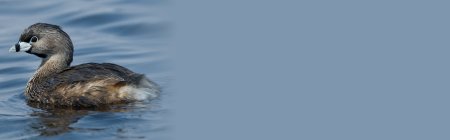
Secretive marshbirds such as rails, bitterns, coots, and grebes are among the most poorly monitored bird groups in North America. With information on status, abundance, population trends, and habitat associations generally lacking for many species, a national monitoring program is being developed to fill these gaps and inform management and conservation of marshbirds and the wetlands they inhabit. In 2008, the Wisconsin Bird Conservation Partnership (WBCP) stepped forward to pilot a framework for the program before its application on regional and national scales. The survey has continued annually and will help shape design of the national program and guide conservation efforts right here in Wisconsin.
What participants can expect
Dawn or dusk in a Wisconsin wetland...does it get any better? Volunteers are needed to conduct two to three surveys of a predetermined route during early mornings or late evenings in May and June. Unlike the owl and nightjar surveys, these are NOT necessarily roadside routes and thus some hiking or even "bushwhacking" is required in some cases. Routes consist of 5 to 10 survey points typically spaced 400 - 800 meters apart and often covering more than a single wetland. Surveyors use playback to broadcast calls of target species (equipment provided) and record marshbirds detected at each survey point over a 10- or 11-minute interval.
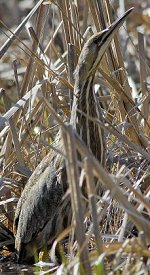
American Bittern
© Dennis E. Malueg
The Wisconsin Marshbird Survey requires some advanced skills relative to other volunteer-based surveys. Observers must have good hearing and know the target species by sight and sound. They must have good navigation skills, be physically fit for offroad hiking, and eager to tackle some technical data recording duties. However, the opportunity to soak in the dawn chorus, perhaps spot an elusive King Rail, and make a contribution to bird monitoring usually makes it well worth the effort.
For more information, contact survey coordinator Ryan Brady, Wisconsin DNR, at [email protected] or 715-685-2933.
Results
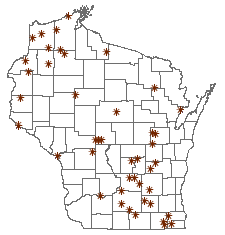
The first two years of this pilot study were very successful. In 2008, observers conducted multiple surveys of 326 survey points at 53 routes statewide. In 2009, they surveyed 311 points at 42 routes statewide. The most commonly detected species were Sora, American Bittern, and Virginia Rail, with smaller numbers of Least Bitterns, American Coots, and Pied-billed Grebes, and several King and Yellow Rails. Wetlands are seldom short on birds and thus surveyors were also treated to Black Terns, Sedge Wrens, Sandhill Cranes, Swamp Sparrows galore, and many other species. See the full results from both years in the 2009 Annual Report.
We have applied similar survey effort in subsequent years and detections, though annually variable, continue to be dominated by similar species. Additional results can be seen in the following links:
- 2010 Overview
- 2011 Habitat Study in partnership with Northwestern University and Chicago Botanic Garden
- 2012 King Rail publication
- WBCP and WDNR continue to work closely with national and regional partners to advance marshbird monitoring efforts in the context of marshbird and wetland conservation. See an outline of the national direction of marshbird monitoring and read regional insights.
- 2018 Report: Marsh Bird Use of Impounded and Unimpounded Wetlands of the Great Lakes Region: An Assessment to Inform Future Management and Monitoring
- 2019-2021 Action Plan of the Midwest Marshbird Working Group
Additional Marshbird Survey Links
Development of a National Marshbird Monitoring Program
A Sampling Design Framework for Monitoring Secretive Marshbirds
USGS Marsh Birds Database
Continental Marshbird Monitoring
Bird Studies Canada - Marsh Monitoring Program